
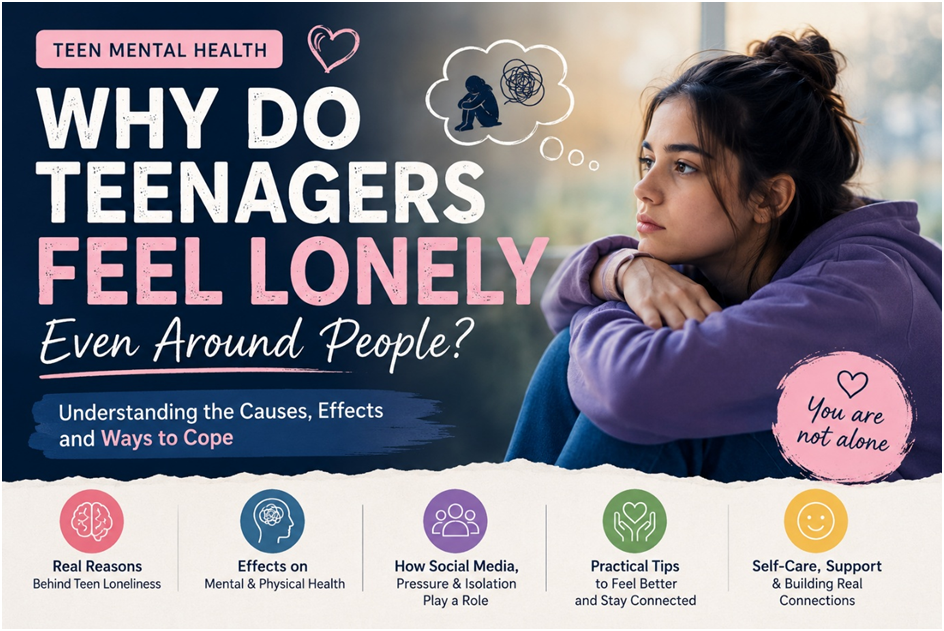
Why Do Teenagers Feel Lonely Even Around People?
Understanding the Causes, Effects, and Ways to Cope
May 29, 2026
Khushboo Saini
Loneliness is something many teenagers experience today, even when they are surrounded by classmates, family members, or online friends. A teenager may sit in a room full of people and still feel emotionally disconnected, misunderstood, or isolated inside.
Human beings naturally need safe and meaningful social connections. Healthy relationships help people feel emotionally secure, understood, and supported. During the teenage years especially, friendships and social belonging become extremely important because this is the stage where young people are trying to understand who they are and where they fit in.
But despite being more "connected" than ever through phones and social media, many teenagers today are struggling with deep feelings of loneliness.
Understanding Teenage Loneliness
Loneliness is not simply about being alone. It is the emotional feeling of being disconnected, unseen, or emotionally unsupported.
A teenager can have:
- Hundreds of social media followers
- School friends
- Group chats
- Daily online interaction
and still feel like nobody truly understands them.
This emotional loneliness can slowly affect both mental and physical health if it continues for a long time.
Why Teenagers Are More Vulnerable to Loneliness
Teenagers between the ages of 13 and 17 are still developing emotionally and socially. During this stage, they are:
- Building their identity
- Seeking acceptance
- Trying to fit in socially
- Comparing themselves with others
- Becoming emotionally sensitive to rejection
Because of this, even small social difficulties can feel extremely intense.
For example, being left out of a group chat, not getting invited somewhere, or feeling ignored by friends may affect teenagers more deeply than adults often realize.
The Role of Social Media and Digital Life
One of the biggest reasons many teenagers feel lonely today is digital overload.
Social media creates a constant cycle of comparison. Teenagers see filtered lives, happy friend groups, vacations, achievements, and perfect moments online every day. Slowly, this can create feelings like:
- "Everyone is happier than me."
- "I'm missing out."
- "Nobody includes me."
- "My life is boring."
This is commonly known as FOMO, the Fear of Missing Out.
Ironically, while social media keeps teenagers connected virtually, it often reduces deep emotional connection in real life.
Many teenagers spend hours online but still struggle with:
- Real conversations
- Emotional closeness
- Trust
- Face-to-face communication
Research also shows that excessive screen time can increase emotional exhaustion, anxiety, and low self-esteem.
How the Pandemic Changed Social Connection
COVID-19 affected teenagers during some of the most important years of their social development.
For many young people, lockdowns meant:
- Less face-to-face interaction
- More screen dependence
- Social isolation
- Reduced emotional connection
- Difficulty rebuilding social confidence later
Some teenagers became comfortable communicating only online and started feeling anxious in real-life social settings afterward.
Even today, many young people still struggle with confidence in physical social environments because they became emotionally used to distance and virtual interaction.
Academic, Career, and Financial Pressure
Teenagers today are growing up in a highly competitive environment.
Many constantly feel pressure related to:
- Academic performance
- Career success
- Social image
- Financial stability
- Future uncertainty
This pressure leaves many emotionally exhausted.
Instead of relaxing and building meaningful relationships, teenagers often spend most of their time worrying about productivity, success, or meeting expectations.
As stress increases, emotional connection decreases.
The Loss of Genuine Human Connection
Modern life has become more individualistic. Earlier, people spent more time in communities, neighborhoods, outdoor gatherings, and shared activities. Today, much of life happens through screens.
Even everyday interactions have reduced:
- Online shopping instead of markets
- Self-checkouts instead of conversations
- Digital banking instead of human interaction
- Online entertainment replacing outdoor activities
Slowly, many teenagers are spending more time "connected digitally" but less time feeling emotionally connected.
Signs a Teenager May Be Feeling Lonely
Teenagers do not always openly say they feel lonely. Instead, loneliness often appears through behavior changes.
Parents or adults may notice:
- Spending excessive time alone
- Emotional withdrawal
- Irritability or mood swings
- Increased screen dependence
- Poor sleep
- Loss of interest in activities
- Overthinking social situations
- Feeling emotionally exhausted
- Saying things like "Nobody understands me"
Sometimes loneliness hides behind silence, anger, or even humor.
The Emotional and Physical Effects of Loneliness
Long-term loneliness can affect both mental and physical well-being.
Emotional Effects
Loneliness may increase the risk of:
- Anxiety
- Depression
- Emotional burnout
- Low self-esteem
- Overthinking
- Feelings of hopelessness
Some teenagers may also start using unhealthy coping mechanisms like emotional overeating, smoking, alcohol use, or social withdrawal.
Physical Effects
Research shows that chronic loneliness can also affect physical health by contributing to:
- Poor sleep
- Fatigue
- Low concentration
- Weakened immunity
- Increased stress levels
- High blood pressure
- Obesity and lifestyle-related health issues
When emotional needs stay unmet for a long time, the body also begins to feel the impact.
Things Teenagers Can Do When Feeling Lonely
Loneliness can feel overwhelming, but small steps can slowly help rebuild emotional connection and confidence.
1. Help Others
Volunteering or helping someone can create meaningful human connection and give a sense of purpose.
2. Reconnect With Old Friends
Sometimes valuable friendships already exist; they just need reconnection.
3. Try New Activities
Joining sports, art classes, clubs, music groups, or workshops can create opportunities to meet like-minded people.
4. Understand What Feels Missing
Some teenagers may want deeper emotional connection, while others may simply want a supportive friend group. Understanding the emotional gap helps make loneliness feel more manageable.
5. Spend Time Away From Screens
Too much online time can increase emotional exhaustion. Real-world experiences help improve emotional connection.
6. Spend Time With Pets or Nature
Animals, outdoor walks, and calm environments can reduce feelings of emotional isolation.
7. Practice Self-Compassion
Loneliness often damages self-esteem. Writing down positive qualities or practicing self-kindness can help challenge negative thoughts.
How Parents and Adults Can Help
Teenagers often do not need immediate solutions. Many times, they simply need emotional understanding.
Parents can help by:
- Listening without judgment
- Creating emotionally safe conversations
- Avoiding criticism or comparison
- Encouraging healthy social interaction
- Supporting offline activities
- Watching for signs of emotional distress
Sometimes, one emotionally safe relationship can make a huge difference in a teenager's life.
Healthy and Unhealthy Ways Teenagers Try to Handle Loneliness
Loneliness can feel emotionally exhausting, especially during the teenage years. When teenagers feel disconnected, misunderstood, or emotionally alone for a long time, they naturally start searching for ways to cope with those feelings.
Some coping methods help improve emotional well-being in a healthy and lasting way, while others may provide temporary comfort but slowly create bigger emotional and mental health problems.
Understanding the difference between healthy and unhealthy coping mechanisms is important for both teenagers and parents.
Healthy and Natural Ways to Manage Loneliness
These are healthy coping techniques that help teenagers build emotional connection, self-confidence, and mental balance over time.
1. Building Real-Life Social Connections
Even small social interactions can help reduce loneliness. Spending time with supportive people, joining hobby groups, participating in sports, volunteering, or reconnecting with old friends can create meaningful emotional connection.
Teenagers often feel better when they are around people who make them feel accepted without pressure to "fit in."
2. Limiting Excessive Screen Time
Many teenagers try to escape loneliness through endless scrolling, gaming, or social media use. However, too much digital exposure often increases comparison, overthinking, and emotional exhaustion.
Taking small breaks from screens and spending time in real-life environments can help the mind feel calmer and emotionally lighter.
3. Engaging in Creative Activities
Creative activities like drawing, writing, music, dancing, photography, or journaling help teenagers express emotions that they may struggle to talk about openly.
Sometimes emotional healing begins when feelings finally find a safe outlet.
4. Physical Activity and Outdoor Time
Exercise, walking, sports, yoga, or simply spending time outside can improve mood and reduce emotional stress.
Physical movement helps release emotional tension and improves mental well-being naturally.
5. Talking to Someone Safe
Loneliness becomes heavier when emotions stay bottled up.
Talking to:
- A trusted friend
- Parent
- Sibling
- Teacher
- Counselor
- Therapist
can help teenagers feel emotionally understood and supported.
Sometimes teenagers do not need solutions immediately; they simply need someone who genuinely listens.
6. Developing Self-Compassion
Teenagers who feel lonely often become harsh toward themselves. They may start believing:
- "Nobody likes me."
- "I'm not interesting."
- "Something is wrong with me."
Learning self-compassion helps challenge these negative thoughts and improves self-esteem slowly over time.
7. Creating a Balanced Routine
Simple routines like proper sleep, healthy eating, reduced screen exposure, and regular physical activity help regulate emotions and improve mental stability.
When the mind feels emotionally overloaded, structure and routine often provide emotional safety.
Unhealthy or Harmful Ways Teenagers Sometimes Handle Loneliness
Not every coping method is healthy. Some behaviors may temporarily distract from loneliness but can increase emotional distress later.
1. Social Media Addiction
Many teenagers try to escape loneliness by constantly staying online. But excessive scrolling often increases feelings of comparison, rejection, and emotional emptiness.
The more they compare their real life to others' "perfect" online lives, the worse loneliness can feel.
2. Emotional Isolation
Some teenagers slowly stop talking to people altogether because they fear rejection or disappointment.
They may start saying:
- "I don't need anyone."
- "People are fake."
- "I'm better alone."
But emotional withdrawal often deepens loneliness instead of healing it.
3. Overeating or Emotional Eating
Food sometimes becomes a source of temporary emotional comfort during stress or loneliness. Emotional eating may help numb difficult feelings for a short time but does not solve the emotional problem underneath.
4. Substance Use or Smoking
Some teenagers turn toward smoking, alcohol, vaping, or substance use to escape emotional pain or feel socially accepted.
These behaviors may temporarily distract the mind but often increase anxiety, emotional instability, and mental health struggles over time.
5. Seeking Validation Constantly
Lonely teenagers sometimes become emotionally dependent on likes, replies, attention, or validation from others to feel worthy.
When self-worth depends completely on external approval, emotional stability becomes very fragile.
6. Ignoring Emotional Needs
Some teenagers pretend they are "fine" while internally struggling deeply.
Suppressing emotions for too long can lead to:
- Emotional burnout
- Anxiety
- Irritability
- Depression
- Sudden emotional breakdowns
Ignoring loneliness does not make it disappear.
Final Thoughts
Loneliness during teenage years is more common than many people realize. Even teenagers who seem socially active may silently struggle with emotional isolation.
The important thing is understanding that loneliness should not be ignored or dismissed as "just a phase."
Healthy coping methods can slowly help teenagers rebuild emotional connection, confidence, and self-worth. At the same time, recognizing unhealthy coping behaviors early can prevent long-term emotional difficulties.
Most importantly, teenagers need emotionally safe spaces where they feel heard, accepted, and understood without judgment.
Sometimes healing loneliness does not begin with having more people around; it begins with finally feeling emotionally connected to someone genuine.
Teenage loneliness is becoming increasingly common in today's world. Even though young people are constantly connected online, many still feel emotionally disconnected inside.
Loneliness does not always mean someone has no friends. Sometimes it simply means they do not feel truly understood, emotionally safe, or genuinely connected.
The good news is that loneliness can improve with emotional support, meaningful relationships, healthy communication, and safe social environments.
No teenager should feel like they have to handle emotional isolation alone. Feeling connected, understood, and valued is not a luxury; it is a basic emotional need.
By Khushboo Saini
Contact Info
Chandigarh, India
9817303032
officialmanoshala@gmail.com
© 2026 Manoshalaa. All rights reserved.
Developed by TerraDigitalize Dynamics