
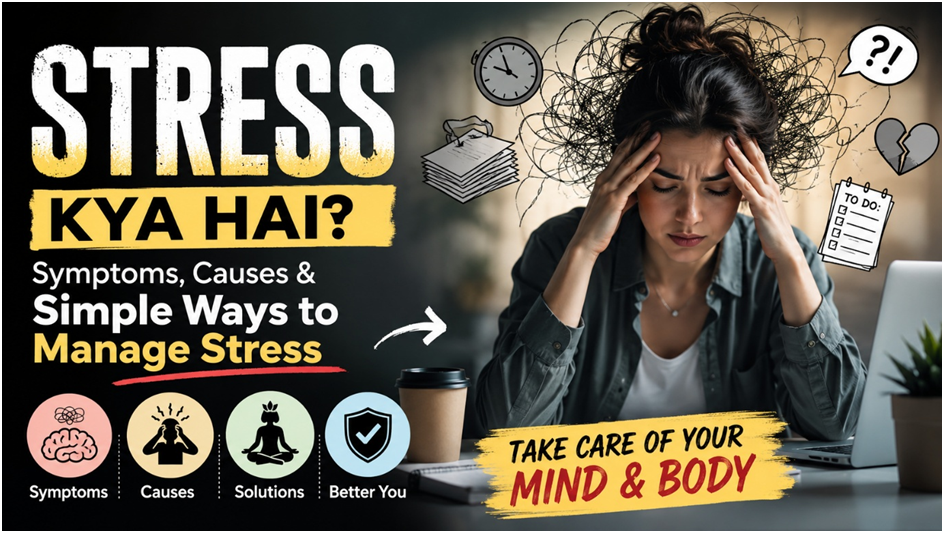
What Is Stress? Signs, Symptoms & Practical Ways to Manage Stress Naturally
Symptoms, Causes, and Simple Ways to Manage Stress
May 29, 2026
Khushboo Saini
Have you ever felt mentally exhausted even after doing "nothing"?
Or noticed that your body feels tired, but your mind still won't stop thinking?
That's how stress often shows up in real life.
Today, stress has become a part of everyday life. Whether it's work pressure, relationship problems, financial struggles, studies, family expectations, or social media overload, our minds are constantly carrying something.
A little stress is normal. In fact, stress is your body's natural response to pressure or challenging situations. It helps your brain stay alert and react quickly. But when stress stays for too long, it slowly starts affecting your emotional, mental, and physical health.
And the difficult part is that many people don't even realize they're stressed.
They just think:
- "Maybe I'm overreacting."
- "I'm just tired."
- "I've become lazy lately."
But sometimes, it's not laziness. It's chronic stress and emotional burnout.
Emotional Symptoms of Stress
Stress doesn't always look dramatic. Sometimes it quietly changes your emotions, reactions, and personality.
You may notice:
- Feeling irritated over small things
- Getting angry more easily
- Feeling emotionally overwhelmed
- Constant overthinking
- Anxiety or nervousness
- Feeling mentally exhausted
- Mood swings
- Feeling emotionally disconnected from others
- Crying more than usual
- Feeling sad without understanding why
Many people also start saying "I'm fine" while silently struggling inside.
Physical Symptoms of Stress
Stress affects the body just as much as the mind.
Common physical signs of stress include:
- Headaches
- Neck and shoulder pain
- Muscle tension
- Chest heaviness
- Increased heart rate
- Fatigue and low energy
- Teeth grinding
- Sleep problems
- Shortness of breath
- Body aches
Your body often gives warning signs before your mind fully understands what's happening.
Cognitive Symptoms of Stress
When stress becomes long-term, your brain also starts feeling overloaded.
You may experience:
- Difficulty concentrating
- Forgetting things easily
- Trouble making decisions
- Constant negative thoughts
- Lack of motivation
- Feeling mentally stuck
- Reduced productivity
Even simple tasks can start feeling mentally exhausting.
Behavioural Signs of Stress
Stress also changes everyday habits and routines.
Some common behavioural symptoms are:
- Procrastination
- Avoiding responsibilities
- Social isolation
- Emotional eating or loss of appetite
- Increased screen time
- Sleeping too much or too little
- Lack of physical activity
- Missing deadlines
- Reduced interest in hobbies
Sometimes stress doesn't make people weak. It just makes them emotionally tired.
Practical Ways to Manage Stress Naturally
Managing stress is not about "thinking positive" all the time.
It's about giving your mind and body real support.
Here are some practical and realistic stress management techniques that actually help in daily life:
1. Stop Starting Your Morning with Your Phone
One of the biggest mistakes people make is checking notifications immediately after waking up.
Your brain goes from "rest mode" to "stress mode" within seconds.
Practical tip:
For the first 20-30 minutes after waking up:
- Avoid social media
- Don't check emails instantly
- Drink water
- Stretch your body
- Sit quietly for a few minutes
A calm morning helps regulate stress for the entire day.
2. Move Your Body, Even If It's Just for 15 Minutes
You don't need intense gym workouts to reduce stress.
Your body simply needs movement.
Practical ways:
- Take a short walk after meals
- Dance to music in your room
- Stretch before sleeping
- Use stairs instead of elevators
- Walk while talking on calls
Physical movement helps release built-up emotional tension from the body.
3. Create a Brain Dump Habit
Many people stay stressed because their mind keeps holding too many thoughts at once.
Practical tip:
Before sleeping, write down:
- Things worrying you
- Tasks you need to do
- Random thoughts in your mind
This helps your brain stop mentally "carrying everything."
You don't need perfect journaling. Just honest writing.
4. Reduce Overstimulation
Sometimes stress isn't caused by one big problem. It's caused by too much noise all day.
Constant notifications, reels, multitasking, loud environments, and endless scrolling can mentally exhaust the brain.
Practical ways:
- Keep your phone away while eating
- Spend 10 minutes daily without screens
- Avoid consuming negative content all day
- Take short silent breaks during work
Your nervous system also needs rest.
5. Learn to Say No Without Feeling Guilty
Many people stay stressed because they constantly try to make everyone happy.
Practical tip:
Before saying yes to something, ask yourself: "Do I genuinely have the mental energy for this?"
Protecting your peace is not selfish.
Healthy boundaries reduce emotional exhaustion.
6. Fix Your Sleep Routine Slowly
Poor sleep increases stress levels faster than most people realize.
Practical habits:
- Avoid screens 30 minutes before bed
- Keep lights dim at night
- Avoid heavy overthinking conversations before sleeping
- Try sleeping and waking up at similar times
A tired brain struggles more with stress and anxiety.
7. Spend Time Around Emotionally Safe People
Not every conversation heals you. Some conversations drain you even more.
Practical tip:
Spend more time with people who:
- Listen without judging
- Make you feel emotionally safe
- Don't constantly criticize you
- Respect your feelings
Supportive relationships improve mental health more than motivational quotes ever can.
8. Practice Deep Breathing During Stressful Moments
When stress increases, breathing automatically becomes shallow and fast.
Try this simple exercise:
- Inhale slowly for 4 seconds
- Hold for 4 seconds
- Exhale slowly for 6 seconds
Repeat 5-10 times.
This helps calm your nervous system naturally.
9. Stop Expecting Yourself to Be Productive All the Time
Sometimes your mind doesn't need pressure. It needs recovery.
Rest is not laziness. Burnout happens when people ignore emotional exhaustion for too long.
10. Spend Time in Nature
Fresh air, sunlight, greenery, and open spaces genuinely help reduce stress hormones.
Practical ideas:
- Sit in a park
- Walk during sunset
- Water plants
- Spend time outdoors without headphones sometimes
Your brain was not designed to stay indoors and overstimulated all day.
Final Thoughts
Stress is not always visible. Some people smile, go to work, reply normally, and still feel mentally exhausted inside. That's why learning stress management is so important.
Start with small changes, not perfect changes.
Take care of your sleep. Move your body. Protect your peace. Talk to supportive people. Give your mind moments of rest.
And most importantly, don't ignore your emotional health while trying to handle everything alone.
Because mental health matters every single day, not just during difficult times.
By Khushboo Saini
Contact Info
Chandigarh, India
9817303032
officialmanoshala@gmail.com
© 2026 Manoshalaa. All rights reserved.
Developed by TerraDigitalize Dynamics