
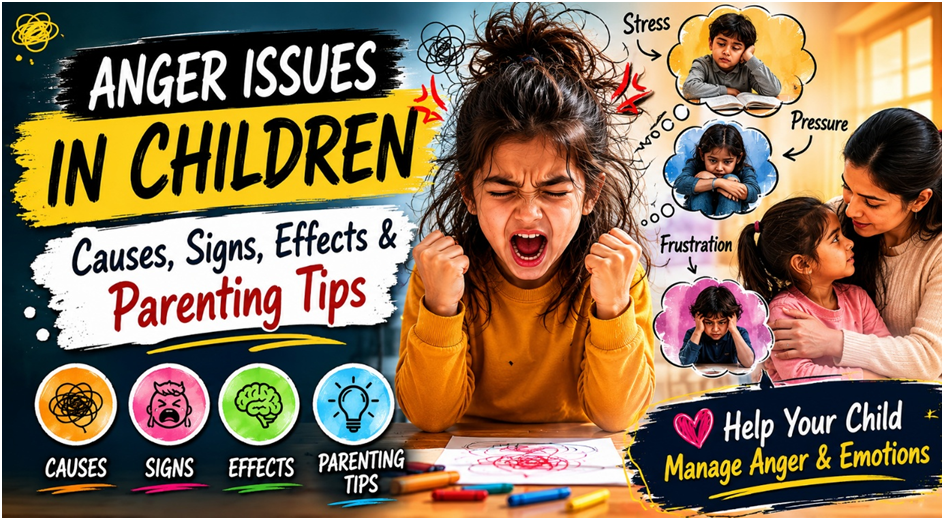
Anger Issues in Children: Signs, Causes, Effects & Practical Parenting Tips
Help Your Child Manage Anger and Emotions
May 29, 2026
Khushboo Saini
Every child feels angry sometimes. A child may become upset when they feel ignored, misunderstood, hurt, frustrated, stressed, or emotionally overwhelmed. In many situations, anger is temporary and manageable. But when anger becomes frequent, intense, or aggressive, it can slowly affect a child's emotional health, behaviour, relationships, and academic performance.
Nowadays, many parents notice that children become irritated very quickly. Some children throw tantrums, scream loudly, hit others, break things, or react aggressively over small situations. Often, adults label these behaviours as "bad manners" or "stubbornness." But in reality, anger in children usually has deeper emotional reasons behind it.
Unlike adults, children often struggle to explain emotions like sadness, disappointment, fear, embarrassment, loneliness, or stress. Since emotional regulation skills are still developing, many children express these difficult feelings through anger.
Sometimes, the child who looks "angry all the time" is actually emotionally exhausted inside.
Family stress, school pressure, bullying, emotional neglect, social rejection, excessive screen time, and mental health conditions can all influence a child's emotional behaviour. If anger issues are ignored for a long time, they may affect confidence, friendships, emotional well-being, and overall development.
The good news is that children can learn healthy anger management skills when they receive emotional support, patience, understanding, and proper guidance from adults.
This article explains:
- Causes of anger issues in children
- Emotional and behavioural signs
- Psychological effects of uncontrolled anger
- Practical parenting tips for anger management in kids
- Healthy emotional regulation strategies
Understanding Anger in Children
Anger is a natural emotional response that usually appears when a child feels:
- Frustrated
- Hurt
- Unheard
- Stressed
- Treated unfairly
- Emotionally unsafe
Every child expresses anger differently depending on personality, emotional maturity, age, and environment.
Some children express anger openly by:
- Shouting
- Crying
- Arguing
- Throwing objects
- Hitting or kicking
Others may:
- Become silent
- Withdraw socially
- Avoid conversations
- Keep emotions bottled inside
Occasional anger and tantrums are normal during childhood, especially in younger children. However, anger becomes concerning when:
- Emotional outbursts happen very frequently
- Aggression increases
- The child hurts themselves or others
- School performance starts declining
- Friendships get affected
- The child struggles to calm down
- Family members feel emotionally exhausted
In many cases, anger is not the "main" emotion.
A child may actually be feeling anxious, lonely, insecure, rejected, or emotionally overwhelmed underneath the anger.
Common Causes of Anger Issues in Children
There is usually not one single reason behind anger problems in kids. Emotional, social, environmental, and psychological factors often work together.
1. Frustration and Difficulty Expressing Emotions
One of the biggest causes of anger in children is frustration.
Children often become angry when:
- They cannot express feelings properly
- Things do not go according to their expectations
- They feel misunderstood
- They fail at something
- They struggle academically
- They feel ignored or compared to others
For example, a child may feel embarrassed, jealous, lonely, or hurt but may not know how to communicate those emotions calmly.
Instead, the feelings come out through:
- Screaming
- Crying
- Arguing
- Aggressive behaviour
- Throwing things
Repeated frustration can slowly increase irritability and emotional sensitivity.
2. Family Environment and Parenting Style
The home environment strongly affects a child's emotional behaviour.
Children learn emotional reactions by observing adults around them. They notice:
- How parents handle stress
- How conflicts are managed
- Whether emotions are expressed calmly or aggressively
If a child grows up in a stressful environment filled with:
- Constant shouting
- Criticism
- Aggression
- Emotional neglect
- Harsh punishment
they may start reacting similarly.
At the same time, children who receive very little emotional attention may also behave aggressively because they are seeking connection, care, or attention.
Sometimes parents themselves are emotionally overwhelmed due to:
- Work stress
- Financial pressure
- Relationship problems
- Mental exhaustion
Children often absorb emotional tension even when adults think they are hiding it.
3. Academic Pressure and School Stress
Children today experience pressure from a very young age.
Stress related to studies, competition, and social expectations can affect emotional regulation significantly.
Common school-related stress factors include:
- Fear of poor marks
- Pressure to perform well
- Comparison with classmates
- Bullying
- Difficulty making friends
- Fear of disappointing parents or teachers
Children who constantly feel rejected, criticised, or socially isolated may become emotionally defensive and reactive.
Sometimes anger becomes a child's way of protecting themselves emotionally.
4. Bullying and Social Rejection
Bullying can deeply affect a child's mental health.
Children who experience bullying may:
- Become emotionally sensitive
- Develop anger issues
- Feel unsafe at school
- Become withdrawn
- Lose confidence
- React aggressively
Some children express emotional pain outwardly through anger because they do not know how to process rejection internally.
5. Excessive Screen Time and Digital Overstimulation
Too much screen time can negatively affect emotional health and behaviour.
Children who spend many hours:
- Watching fast-paced content
- Playing violent games
- Constantly scrolling online
may become:
- More impatient
- Emotionally reactive
- Easily irritated
- Less focused
Digital overstimulation can reduce attention span and increase emotional impulsivity.
Excessive screen time also affects:
- Sleep quality
- Physical activity
- Face-to-face communication
- Emotional connection with family
All of these factors influence emotional regulation.
6. Underlying Mental Health Conditions
Sometimes anger problems are linked with psychological or developmental conditions such as:
- Attention-Deficit/Hyperactivity Disorder
- Autism Spectrum Disorder
- Anxiety Disorder
- Depression
- Oppositional Defiant Disorder (ODD)
- Trauma-related disorders
For example:
- Children with ADHD may struggle with impulsive behaviour and frustration tolerance.
- Anxious children may react aggressively when emotionally overwhelmed.
- Trauma can increase emotional sensitivity and irritability.
7. Poor Sleep and Unhealthy Lifestyle Habits
Sleep has a huge impact on emotional regulation.
Children who do not get enough sleep often become:
- More irritable
- Emotionally reactive
- Restless
- Impatient
Similarly:
- Poor eating habits
- Lack of exercise
- Constant overstimulation
- Irregular routines
can affect mood stability and increase frustration levels.
Signs and Symptoms of Anger Issues in Children
Every child expresses anger differently. Some signs are emotional while others are behavioural or physical.
Emotional Signs
- Frequent irritability
- Mood swings
- Emotional sensitivity
- Crying easily
- Feeling misunderstood
- Difficulty handling frustration
- Feeling lonely or rejected
Behavioral Signs
- Shouting or screaming
- Throwing objects
- Hitting, kicking, or biting
- Constant arguing
- Refusing instructions
- Damaging things
- Aggressive behaviour toward siblings or classmates
- Isolating themselves
Physical Signs
- Clenched fists
- Muscle tension
- Fast breathing
- Restlessness
- Red face during anger episodes
- Stress-related headaches or stomach aches
Social and Academic Signs
- Difficulty making friends
- Frequent complaints from school
- Poor concentration
- Declining academic performance
- Classroom conflicts
- Difficulty participating in group activities
Parents and teachers should observe patterns over time instead of judging children based on single incidents.
Psychological Effects of Uncontrolled Anger in Children
If anger issues are ignored, they can slowly affect many areas of a child's life.
Relationship Problems
Children with uncontrolled anger often struggle socially.
Other children may:
- Avoid them
- Feel uncomfortable around them
- Stop including them in activities
Over time, this can increase loneliness and emotional insecurity.
Low Self-Esteem
Many children feel guilty after emotional outbursts.
Constant criticism like:
- "Why are you always angry?"
- "You are impossible to handle."
can slowly damage confidence and self-worth.
Some children start believing they are "bad children."
Academic Difficulties
Difficulty controlling emotions can affect:
- Concentration
- Classroom participation
- Motivation
- Learning ability
Children who frequently get into trouble at school may slowly lose interest in studies.
Mental Health Risks
Long-term emotional stress may increase the risk of:
- Anxiety
- Depression
- Behavioural difficulties
- Emotional withdrawal
- Unhealthy coping patterns later in life
That is why early emotional support is extremely important.
Practical Parenting Tips to Help Children Manage Anger
Children need emotional guidance more than fear-based punishment.
Here are practical and realistic anger management tips for parents:
1. Stay Calm During Emotional Outbursts
Children copy adult behaviour.
If parents respond with shouting, children learn that aggression is an acceptable way to express emotions.
Practical tip:
Instead of yelling:
- Lower your voice
- Speak slowly
- Give the child space to calm down
Simple statements like "I know you're upset right now" can help children feel emotionally safe.
2. Teach Emotional Vocabulary
Many children become angry because they cannot identify emotions properly.
Teach them words like:
- Angry
- Sad
- Hurt
- Frustrated
- Left out
- Embarrassed
- Nervous
Practical activity:
Use emotion charts, storybooks, or daily conversations to help children describe feelings.
The better children understand emotions, the easier emotional regulation becomes.
3. Validate Feelings but Correct Behaviour
Validation means accepting the emotion without supporting harmful behaviour.
For example: "It's okay to feel angry, but it's not okay to hit someone."
Children calm down faster when they feel emotionally heard instead of emotionally rejected.
4. Create Healthy Daily Routines
Children feel emotionally safer with structure and predictability.
Practical habits:
- Fixed sleep schedules
- Healthy meals
- Outdoor play
- Limited screen time
- Consistent study routines
Small routines create emotional stability.
5. Reduce Excessive Screen Time
Too much digital exposure increases emotional overstimulation.
Practical ways:
- Keep screen-free mealtimes
- Avoid screens before bedtime
- Encourage outdoor activities
- Replace some screen time with hobbies
Children need real-life emotional connection too.
6. Encourage Healthy Emotional Expression
Teach children that anger itself is not "bad."
What matters is how they express it.
Healthy coping methods:
- Drawing feelings
- Writing emotions down
- Talking calmly
- Deep breathing
- Listening to calming music
- Physical exercise
- Using a "calm corner"
7. Avoid Harsh Punishment
Excessive punishment, humiliation, or physical discipline often increases:
- Fear
- Anger
- Emotional insecurity
Healthy discipline focuses on:
- Calm communication
- Consistent boundaries
- Problem-solving
- Positive reinforcement
Children learn better through emotional safety than fear.
8. Spend Quality Time Together
Sometimes aggressive behaviour is a sign of emotional disconnection.
Simple bonding activities:
- Reading together
- Playing games
- Going for walks
- Talking before bedtime
- Eating meals together
Small moments of emotional connection matter deeply.
9. Teach Relaxation Techniques
Relaxation exercises help children calm their nervous system.
Practical calming techniques:
- Deep breathing
- Counting slowly
- Stretching
- Mindfulness activities
- Listening to soothing music
Regular practice improves emotional control over time.
10. Seek Professional Help When Needed
Professional support may help if:
- Aggression becomes dangerous
- Emotional outbursts are very intense
- Anger affects daily functioning
- Signs of anxiety or depression appear
- Trauma or developmental concerns exist
A child psychologist or therapist can help children build healthy coping skills through:
- Cognitive Behavioural Therapy (CBT)
- Play therapy
- Family counselling
Seeking help early can improve long-term emotional well-being.
Final Thoughts
Anger issues in children are often signs of emotional distress, not simply "bad behaviour."
Children need:
- Emotional understanding
- Patience
- Healthy boundaries
- Safe communication
- Supportive relationships
Punishment alone rarely solves emotional struggles.
When adults help children feel emotionally safe, heard, understood, and supported, children slowly learn healthier ways to manage difficult emotions.
And sometimes, behind an angry child, there is simply a child who does not yet know how to say:
"I'm hurting inside."
By Khushboo Saini
Contact Info
Chandigarh, India
9817303032
officialmanoshala@gmail.com
© 2026 Manoshalaa. All rights reserved.
Developed by TerraDigitalize Dynamics