
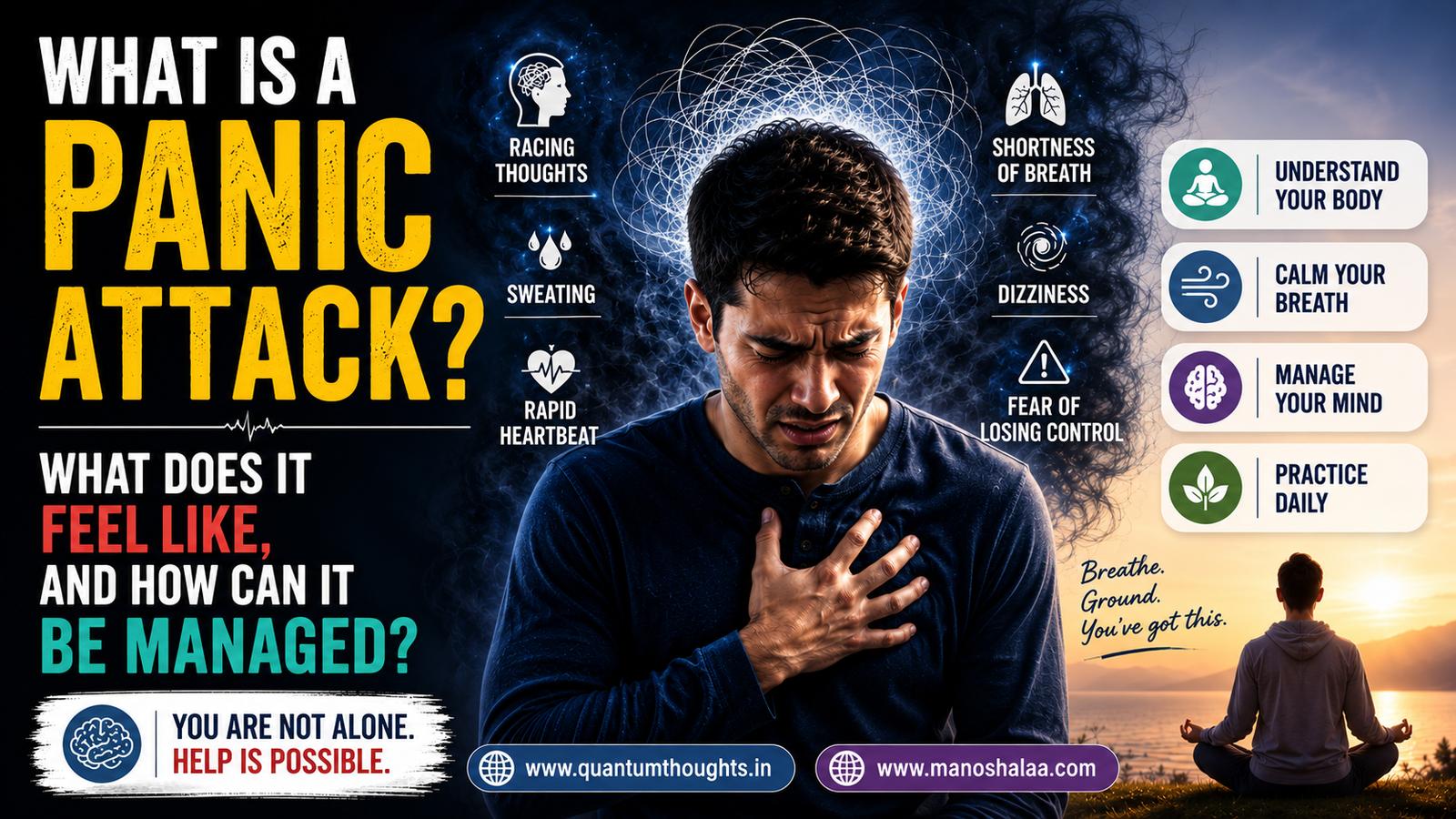
What Is a Panic Attack? What Does It Feel Like, and How Can It Be Managed?
Understand the Alarm System, Feel Less Alone, and Find Ways to Cope
August 4, 2026
Ravi Dangariya (Rick Patel)
"This panic attack is not a sign that your body is failing. It is a sign that your alarm system is reacting more intensely than the situation requires."
Suddenly, the heart begins to race, breathing becomes difficult, the entire body starts to tremble, and there is a feeling that something terrible is about to happen. For many people, this experience can be so terrifying that they believe they are having a heart attack.
However, these symptoms can often be those of a panic attack.
For the person going through it, the experience is terrifying and feels extremely real. The body and brain respond as though a life-threatening situation has occurred, even in the absence of an obvious external threat.
In this article, we will try to understand what a panic attack is, how it feels, why it happens, and how to deal with it.
What Is a Panic Attack?
A panic attack is characterized by a sudden onset of extreme fear or panic that causes a strong physical and mental reaction.
The attack frequently peaks in intensity in a matter of minutes. The effects usually last five to twenty minutes, though some people may feel them for a bit longer.
During a panic attack, a person may feel as though:
- They will lose consciousness
- Their heart will stop beating
- They will not be able to breathe
- They will lose control
- Or they are passing away
Most panic attacks are not fatal, but they do feel very real.
How Does a Panic Attack Feel?
Although each person's experience is unique, typical symptoms may include:
- A rapidly rising heartbeat
- Chest pain or heaviness
- Breathing difficulties or a feeling of being choked
- Trembling in the hands and feet
- Excessive sweating
- A sense of vertigo or dizziness
- Tingling or numbness in the body
- Sudden intense fear
- A sense that "I am going to die" or "I am going to go crazy"
People often become extremely scared because these symptoms frequently resemble those of a heart attack.
What Causes Panic Attacks?
The "fight-or-flight response" is our body's innate defense mechanism.
The body quickly gets ready when the brain senses a threat:
- The heart beats quickly
- Breathing becomes more rapid
- Muscles stiffen
- Adrenaline and other hormones spike
This response protects us in the event of a genuine threat.
However, during a panic attack, this same alarm system frequently sounds without any real threat.
As a result, when there is no real danger, the body responds as though there is.
Are Anxiety and Panic Attacks the Same Thing?
No.
Anxiety typically develops gradually and is frequently associated with a particular concern or circumstance.
Panic attacks are extremely intense and frequently begin abruptly.
Panic attacks can happen to many people for no apparent reason.
How Should One Respond to a Panic Attack?
The following actions can be beneficial if you or someone close to you has a panic attack:
1. Keep in Mind That This Experience Will End
Although a panic attack is extremely terrifying, it passes.
Remind yourself gently:
"I am safe. In a short while, this experience will pass."
2. Pay Attention to Your Breathing
During a panic attack, many people begin to breathe quickly.
Try to breathe deeply and slowly.
For example:
- Inhale for four seconds
- Hold for four seconds
- Exhale slowly for six seconds
Just try to breathe steadily and slowly; do not force it.
3. Pay Attention to Your Surroundings
To stay grounded in the here and now, look around.
You can identify:
- Five things you can see
- Four things you can touch
- Three sounds you can hear
- Two smells
- One taste
This approach is often referred to as a grounding technique.
What Should You Do After a Panic Attack?
After a panic attack, many people experience extreme fatigue.
This can be normal.
Get some rest instead of blaming yourself.
If these attacks happen often, document them:
• When did they take place? • What had been going on earlier? • How long did they last?
This information could be useful for future medical care.
Are Panic Attacks Dangerous?
Although a panic attack can be extremely intense, it is usually not life-threatening.
However, if you are in extreme distress or experience symptoms like chest pain, shortness of breath, or other severe signs for the first time, it is important to seek a medical evaluation, because these symptoms can also be linked to other medical conditions.
How Can Panic Attacks Be Handled Over Time?
The following steps may help if panic attacks happen frequently:
- Keeping a regular sleep schedule
- Avoiding caffeine and other stimulants if they worsen symptoms
- Engaging in regular exercise
- Practicing mindfulness or meditation
- Speaking with someone you trust
- Getting help from a licensed mental health professional if needed
With the right care and guidance, many people can make substantial progress.
Asking for Assistance Is Not a Sign of Weakness
Some people feel embarrassed to discuss panic attacks.
However, mental health is just as important as physical health.
Seeking appropriate guidance is a better course of action than ignoring panic attacks if they occur frequently.
Asking for help is a brave act, not a sign of weakness.
"Fear becomes less powerful the moment we understand what our mind and body are trying to tell us."
By Ravi Dangariya (Rick Patel)
Contact Info
Chandigarh, India
9817303032
officialmanoshala@gmail.com
© 2026 Manoshalaa. All rights reserved.
Developed by TerraDigitalize Dynamics