
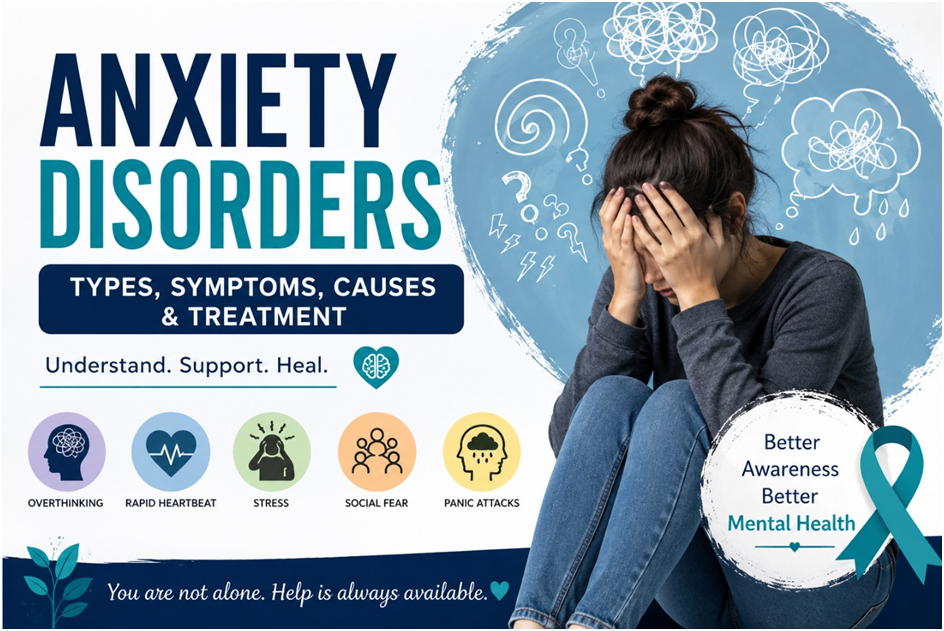
Anxiety Disorders: Types, Symptoms, Causes, and Treatment
Understand, Support, Heal
May 29, 2026
Khushboo Saini
What Are Anxiety Disorders?
Anxiety disorders are common mental health conditions where a person feels excessive fear, worry, or nervousness. While normal anxiety is a part of life, anxiety disorders are more intense and long-lasting. They can affect daily activities, relationships, and overall well-being.
People with anxiety disorders often experience both emotional and physical symptoms, such as overthinking, restlessness, sweating, and a fast heartbeat.
Types of Anxiety Disorders
1. Generalized Anxiety Disorder (GAD)
Generalized Anxiety Disorder (GAD) is a condition where a person has constant and excessive worry about everyday situations like work, health, family, or future. The anxiety is difficult to control and happens almost daily.
Common Symptoms:
- Continuous worrying
- Difficulty concentrating
- Fatigue and restlessness
- Overthinking worst-case scenarios
Case Example:
Riya constantly worries about everything in her life. Even when there is no problem, she feels something bad might happen. Her mind never relaxes, and she feels tired all the time.
2. Panic Disorder
Panic Disorder is characterized by sudden and repeated panic attacks. These are intense episodes of fear that come without warning and can feel life-threatening.
Common Symptoms:
- Rapid heartbeat
- Shortness of breath
- Sweating and dizziness
- Fear of dying or losing control
Case Example:
Amit suddenly experiences a panic attack while sitting at home. His heart races, and he feels like he is having a heart attack. After this, he starts fearing when the next attack will happen.
3. Social Anxiety Disorder
Social Anxiety Disorder is the fear of being judged, embarrassed, or rejected in social situations. It can make everyday interactions very stressful.
Common Symptoms:
- Fear of public speaking
- Avoiding social situations
- Low confidence
- Physical anxiety, such as sweating or shaking
Case Example:
Neha avoids speaking in class because she fears people will judge her. Even simple conversations make her nervous, so she prefers staying quiet.
4. Specific Phobias
A specific phobia is an intense and irrational fear of a particular object or situation, such as heights, animals, water, or flying.
Common Symptoms:
- Immediate fear response
- Avoidance behavior
- Panic when exposed to fear
Case Example:
Rahul has a strong fear of dogs. Even seeing one from far away makes him anxious, so he avoids parks and streets where dogs might be present.
5. Obsessive-Compulsive Disorder (OCD)
Obsessive-Compulsive Disorder (OCD) involves unwanted thoughts, called obsessions, and repetitive behaviors, called compulsions, performed to reduce anxiety.
Common Symptoms:
- Repeated checking or cleaning
- Intrusive thoughts
- Feeling unable to stop behaviors
Case Example:
Simran checks the door lock multiple times before leaving. Even though she knows it is locked, she feels anxious if she doesn't check again.
6. Post-Traumatic Stress Disorder (PTSD)
Post-Traumatic Stress Disorder (PTSD) occurs after experiencing or witnessing a traumatic event such as an accident, abuse, or disaster.
Common Symptoms:
- Flashbacks and nightmares
- Avoiding reminders of the event
- Feeling constantly alert
- Emotional numbness
Case Example:
After a car accident, Arjun keeps reliving the moment. Loud noises scare him, and he avoids driving completely.
Causes of Anxiety Disorders
Anxiety disorders can develop due to multiple reasons, including:
- Genetic factors, such as family history
- Brain chemistry imbalance
- Stressful life events
- Trauma or negative experiences
- Personality traits, such as overthinking or sensitivity
Effective Treatment for Anxiety Disorders
Anxiety disorders are treatable, and many people recover with proper care.
1. Cognitive Behavioral Therapy (CBT)
- Helps change negative thinking patterns
- Teaches coping strategies
2. Medication
- Antidepressants and anti-anxiety medicines
- Must be taken under medical supervision
3. Lifestyle Changes
- Regular exercise
- Healthy sleep routine
- Balanced diet
4. Relaxation Techniques
- Deep breathing exercises
- Meditation and mindfulness
- Yoga
5. Social Support
- Talking to friends and family
- Joining support groups
Final Thoughts
Anxiety disorders are common but manageable mental health conditions. Understanding the types of anxiety disorders, symptoms, and treatment options can help in early identification and recovery. With the right support and care, people can lead a healthy and balanced life.
By Khushboo Saini
Contact Info
Chandigarh, India
9817303032
officialmanoshala@gmail.com
© 2026 Manoshalaa. All rights reserved.
Developed by TerraDigitalize Dynamics