
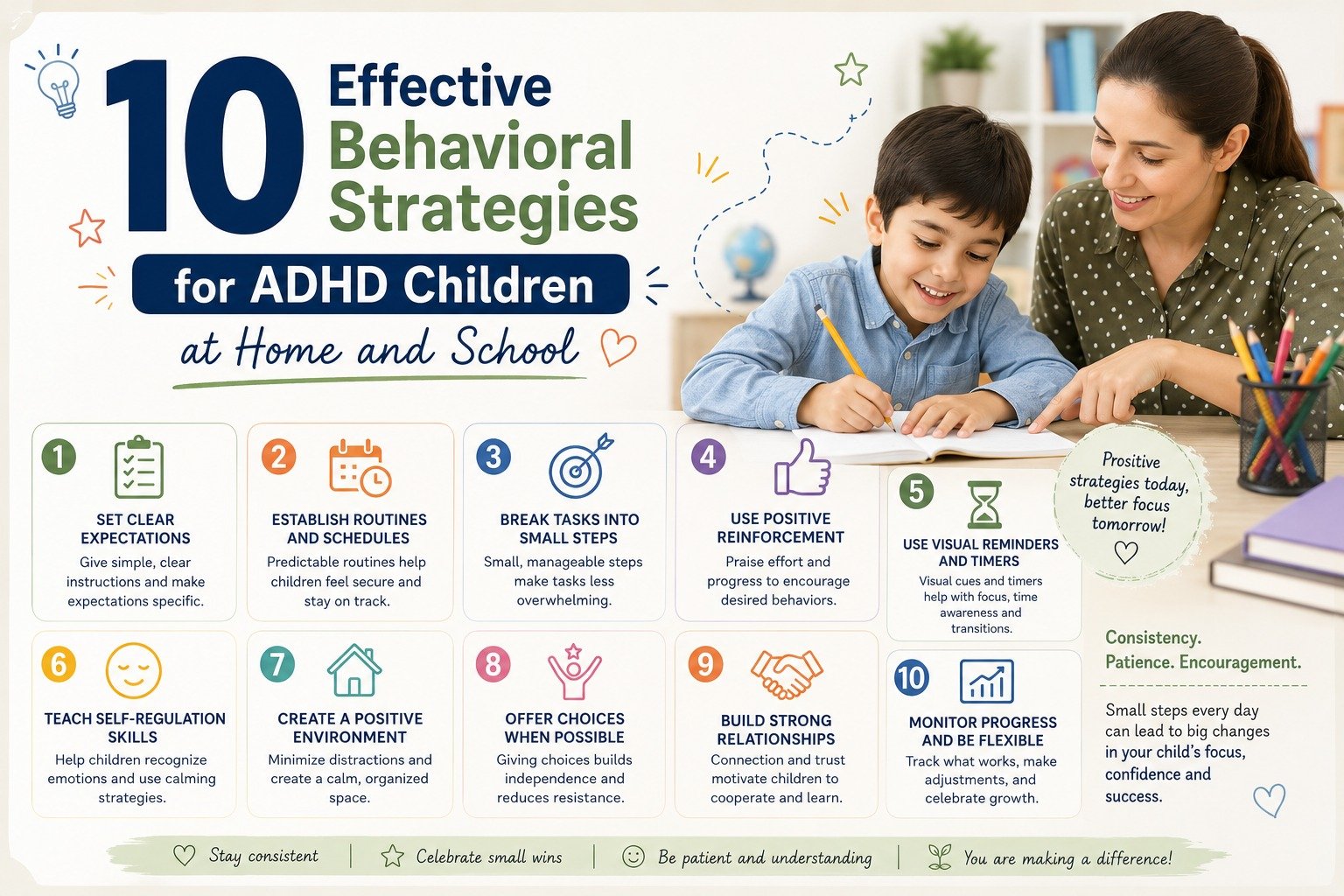
10 Effective Behavioral Strategies for ADHD Children at Home and School
Practical Support for Home and Classroom
May 18, 2026
Khushboo Saini
Understanding Behavioral Challenges in ADHD Children
Children with Attention Deficit Hyperactivity Disorder (ADHD) often find it difficult to stay focused, follow instructions, control impulsive behavior, or manage emotions. These challenges can affect their performance in school, relationships with others, and daily routines at home. Many parents and teachers feel confused about how to handle these situations in a calm and supportive way.
Behavioral strategies are simple techniques that help children learn positive habits and better self-control over time. The purpose is not to punish the child, but to guide them in a way that feels safe, structured, and encouraging. With consistency and patience, these strategies can make everyday life easier for both the child and the adults around them.
1. Use a Daily Routine for ADHD Children
Children with ADHD usually feel more comfortable when their day follows a predictable routine. Sudden changes or unplanned activities can make them feel distracted or overwhelmed. Creating a fixed routine for waking up, meals, homework, playtime, and sleep helps the child understand what comes next.
For example, if homework always happens after a short snack break, the child slowly starts preparing mentally for that activity. A regular routine also reduces arguments because children know what is expected from them throughout the day.
2. Give Simple Instructions Instead of Long Lectures
One common mistake adults make is giving too many instructions at once. Children with ADHD may lose focus in the middle of long explanations and forget what they were supposed to do. Short and clear instructions work much better.
Instead of saying, "Your room is always messy and you never listen properly," it is more effective to calmly say, "Please put your books on the shelf first." Once the child completes one task, the next instruction can be given. This reduces confusion and helps children complete tasks more successfully.
3. Appreciate Good Behavior Immediately
Children with ADHD respond strongly to encouragement and positive attention. When adults notice and appreciate even small improvements, children feel motivated to repeat that behavior again.
For example, if a child sits calmly for a few minutes or completes homework without reminders, simple praise like "You did that really well today" can make a big difference. Positive reinforcement helps build confidence and creates a healthier emotional connection between the child and the parent or teacher.
4. Reduce Distractions During Study Time
Many ADHD children get distracted very easily by noise, television, phones, or too many objects around them. Creating a quiet and organized study space can improve focus significantly.
A clean table, fewer unnecessary items, and limited screen distractions help the child pay attention better. Some children also concentrate more effectively when study time is divided into short sessions with small breaks in between.
5. Give Breaks Between Tasks
Children with ADHD often become restless if they are expected to sit continuously for long periods. Small movement breaks between activities help them release extra energy and return to tasks with better focus.
Simple activities like stretching, walking for a few minutes, or drinking water can refresh the child mentally. These short breaks prevent frustration and improve concentration during study or classroom activities.
6. Stay Calm During Emotional Outbursts
Children with ADHD sometimes react quickly when they feel frustrated, angry, or overwhelmed. In such moments, shouting or arguing usually makes the situation worse. A calm response from adults helps the child feel safer and settle down more easily.
Instead of reacting immediately, it is often better to speak softly, give the child a little time to calm down, and then discuss the situation later. Emotional regulation improves slowly, so patience is extremely important.
7. Set Realistic Expectations for ADHD Children
Every child with ADHD learns and behaves differently. Expecting perfect behavior all the time can increase stress for both the child and the parents. It is more helpful to focus on small progress instead of perfection.
For example, if a child usually studies for five minutes but today manages to focus for ten minutes, that improvement should be recognized. Small achievements slowly build confidence and motivation.
8. Encourage Physical Activities Every Day
Regular physical activity can help ADHD children manage hyperactivity and improve focus naturally. Outdoor games, cycling, dancing, running, or sports allow children to use their energy in a healthy and structured way.
Many parents notice that children become calmer and more attentive after physical activity because movement helps regulate energy levels and reduces restlessness.
9. Teach the Child to Pause Before Reacting
Impulsive behavior is very common in ADHD. Children may interrupt conversations, answer too quickly, or react emotionally without thinking. Teaching them to pause for a few seconds before responding can gradually improve self-control.
Simple habits like taking a deep breath, counting slowly, or listening fully before speaking can help children think more calmly before reacting.
10. Spend Positive Time with the Child Every Day
Children with ADHD often hear more corrections than appreciation throughout the day. Spending even 15–20 minutes daily in positive interaction can improve their confidence and emotional well-being.
This time can include talking, drawing, playing a simple game, or going for a walk together. When children feel emotionally connected and accepted, they are more likely to respond positively to guidance and behavioral support.
Helping ADHD Children with Patience and Consistency
Behavioral strategies for ADHD children do not create overnight changes, but small consistent efforts can make a meaningful difference over time. Children with ADHD need understanding, structure, encouragement, and emotional support more than constant criticism. When parents, teachers, and caregivers respond with patience and realistic expectations, children slowly learn how to manage attention, emotions, and behavior in a healthier way.
By Khushboo Saini
Contact Info
Chandigarh, India
9817303032
officialmanoshala@gmail.com
© 2026 Manoshalaa. All rights reserved.
Developed by TerraDigitalize Dynamics